- +91 098237 26008
- contact@porwalcycle.com
- DERON Heights, Shop No.003, Opp.to Mahableshwar Hotel, Next To Ranka Jewellers, Baner, Pune - 411045

| 3 months ago
Buying a two-wheeler isn't just about picking something that looks good anymore. It has become a simple maths problem.
How much will it cost you every month?
How often will you use it?
And most importantly, are you paying for features you'll barely use?
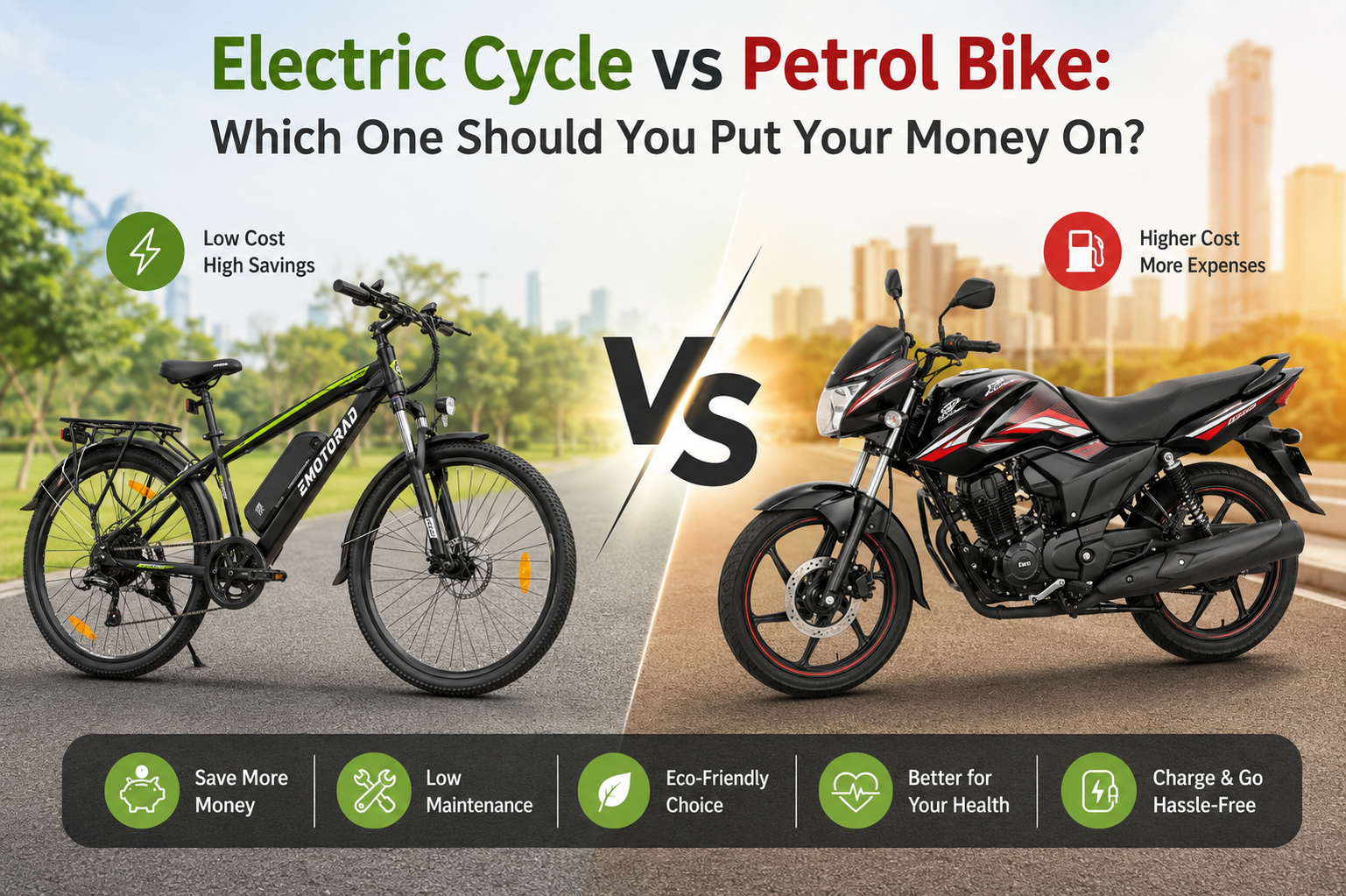
That's exactly why the electric cycle vs petrol bike debate has picked up over the last few years. Both will take you from Point A to Point B, but they'll leave a very different dent in your wallet.
Let's see where each one stands.
For a surprising number of people, yes. Take a minute and think about your weekday.
Home to office.
Office to a café.
A quick stop at the supermarket.
Back home.
Most city rides don't even cross 20-25 km.
In that case, an electric cycle doesn't feel like a compromise. It feels... sensible.
You pedal when you want. The motor helps when you don't. And you don't find yourself checking petrol prices every other week.
Simple life.
Not everyone has the same routine.
If you're someone who spends weekends on highways or regularly travels between cities, a petrol bike still has the upper hand.
It covers longer distances without stopping to recharge.
Higher speed makes highway rides easier.
Carrying luggage or an extra passenger feels effortless.
Refuelling takes minutes.
That's its playground.
But if most of your riding happens inside the city, those advantages rarely get used.
Buying a petrol bike just because it can go faster is a bit like buying trekking shoes when all you do is walk to the grocery store.
Here's where things get interesting.
The price you pay at the showroom is only the beginning.
A petrol bike quietly keeps asking for money.
Not once.
Again and again.
Maintenance is limited to basic checks, so your monthly running cost stays comfortably low.
If your goal is affordable commuting, this round clearly goes to the electric cycle.
Ask anyone who's owned a petrol bike for a few years.
There's always something.
A service due.
Brake work.
Oil replacement.
A strange engine sound that suddenly appears one morning.
That's perfectly normal. Machines with engines demand attention.
An electric cycle is much simpler by design.
Battery health
Tyre pressure
Brakes
Chain lubrication
Less time at the service centre.
Less money spent unexpectedly.
Less stress.
That's a combination nobody complains about.
This one's easy.
Cities aren't getting any emptier.
Signals.
Speed breakers.
Traffic jams.
Road diversions.
Sound familiar?
In situations like these, an electric cycle actually feels more enjoyable than many people expect.
It's light enough to handle narrow roads.
Parking usually isn't a struggle.
And the silent ride is oddly satisfying once you get used to it.
A petrol bike definitely offers more power, but let's be honest—you rarely get to use that power when you're crawling through evening traffic.
This isn't about sounding preachy.
It's just a fact.
An electric cycle doesn't produce tailpipe emissions while you're riding. It also creates very little noise compared to a petrol-powered vehicle.
Cleaner air
Quieter streets
Lower carbon footprint
Less dependence on fossil fuels
Small changes don't fix the planet overnight.
But they do move things in the right direction.
For some people, absolutely.
For others, not really.
Travel mostly within the city
Want to cut fuel expenses
Prefer low maintenance
Like the idea of staying a little active
Need a practical ride for everyday errands
Long-distance commuting
Highway riding
Frequent outstation trips
Carrying heavy loads regularly
The smarter choice isn't the more expensive one.
It's the one that matches your everyday life.
This is probably the biggest bonus people don't expect.
An electric cycle still encourages movement.
You're not sitting and twisting a throttle for the entire ride.
Pedal when you feel like it.
Let the motor assist when you're tired.
It's a comfortable middle ground between regular cycling and motorised commuting.
A little activity every day doesn't sound like much.
Over months, though, it adds up.
Truth be told...
There isn't a winner. There's only the better fit. If you need speed and regularly travel long distances, a petrol bike is worth considering.
If your priority is saving money, avoiding fuel expenses, reducing maintenance, and making daily commuting easier, an electric cycle makes a strong case for itself.
Buy according to your routine, not someone else's. That's the decision you'll thank yourself for later.
Ready to make your everyday rides lighter on your pocket and smoother on the road?
Explore the latest electric cycles at Porwal Cycle.
